 Plumber
 Bullhead City, AZ
Repiping in Bullhead City, AZ
Whole-home and partial repipes that retire corroding copper and failing poly lines — planned around your household, tested before walls close.
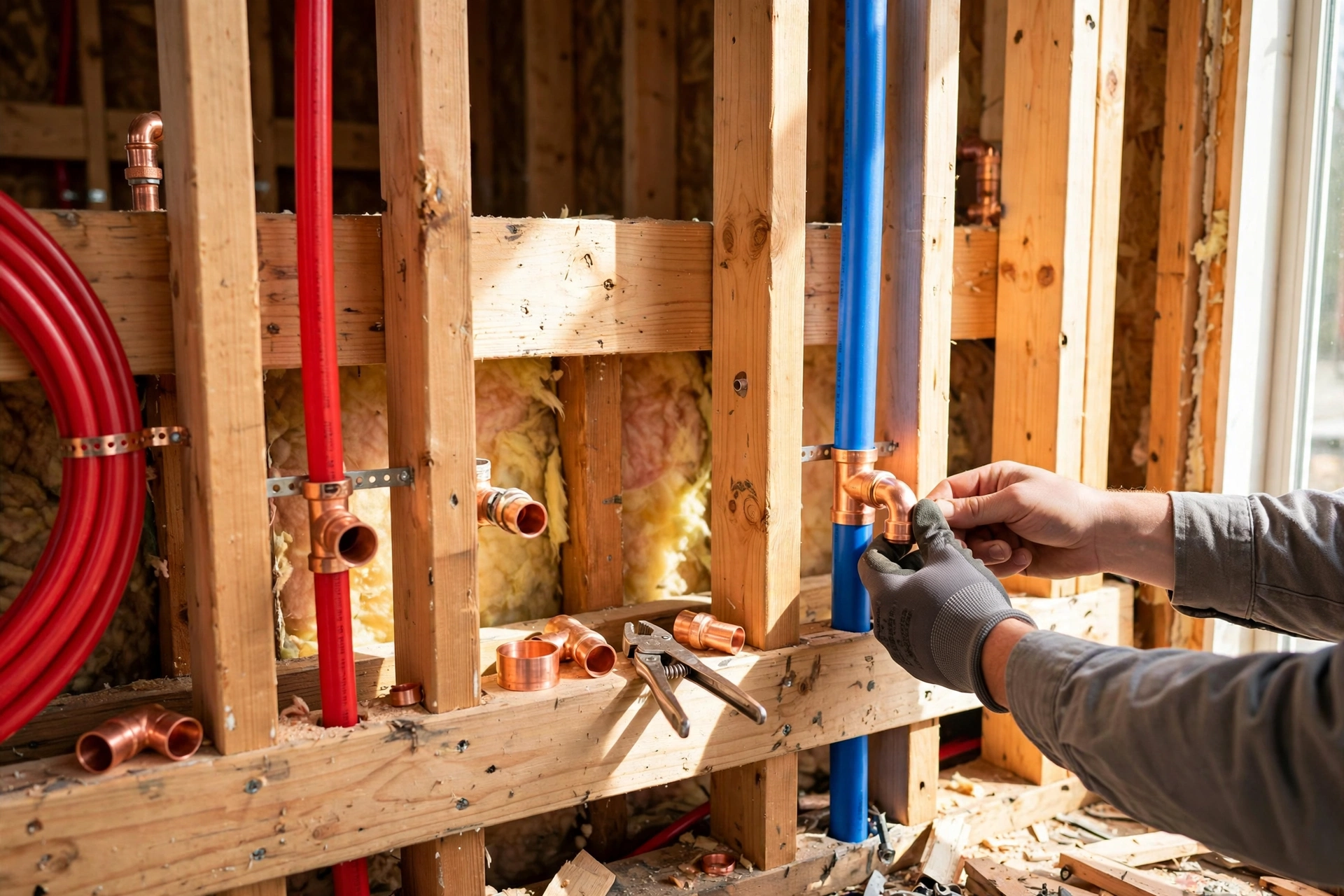
Repiping is the decision Bullhead City homeowners arrive at after the third leak: the pipes themselves, not any single joint, have reached the end of their life. Inside-out corrosion in copper fed by mineral groundwater, and heat-aged poly piping in manufactured homes, both produce the same pattern — leaks that migrate around the house, each repair revealing the next weak point.
This page explains how to recognise the repiping point, what a repipe involves in slab, site-built and manufactured homes, PEX versus copper in desert conditions, and how the work is staged so the household keeps water through most of the project.
For pricing context before anything else, the Bullhead City cost page publishes the market ranges repiping sits inside — starting with single leak repair (market range): About $94–$283 — the cost a repipe stops repeating. And if your symptom is broader than repiping, the Bullhead City plumbers homepage routes every common symptom to the right service.
What repiping covers in Bullhead City
A repipe replaces the home's water distribution lines — sometimes the whole system, sometimes the failing half (often the hot side, which corrodes faster). New lines are usually routed through walls and attic rather than back under the slab, removing the slab-leak risk for those runs entirely. Attic routing in Bullhead City demands proper insulation and sensible runs, because an attic here exceeds outdoor temperature in summer and the lines must also tolerate the occasional cold winter night.
Material choice: PEX dominates modern repipes for good reasons — it tolerates mineral water without pinholing, flexes instead of bursting, and runs with fewer joints. Copper remains an option where owners prefer it, with the honest caveat that the same water that thinned the old copper will work on the new. For manufactured homes, a repipe replaces belly-space poly with properly supported, insulated PEX runs — one of the most transformative jobs for Buena Vista and Holiday Highlands housing stock.
Warning signs you need this service
- Two or more leaks in different places within a short period
- Pinhole leaks confirmed in copper — the run is thinning generally
- Rusty or brown water from multiple taps, worst after standing
- Pressure that has declined across the whole house over years
- Visible corrosion, green staining or crust at exposed pipe runs
- A manufactured home still on original poly or grey polybutylene-era lines
- Water quality complaints traced to the pipes themselves
- A home purchase where inspection flags the distribution system as end-of-life
What causes it here
Time plus water chemistry. Bullhead City's groundwater corrodes copper from inside over decades, and hot lines go first because heat accelerates the chemistry — which is why the hot side often fails years before the cold. Manufactured-home poly piping embrittles under heat cycles. High static pressure, where present, stresses every weakened point. A repipe is warranted when the failure is systemic; detection evidence from prior repairs usually makes the pattern unmistakable.
How the work is done
A repipe begins with mapping: fixtures, routes, and the choice of what is replaced now versus later. New runs are pulled through walls and attic with minimal openings, each fixture is reconnected, and the old system is isolated and drained. The work is staged by zone so the home keeps water to at least part of the house at day's end wherever the layout allows. Every new run is pressure-tested before wall patches close, and the final system is flushed and tested at full pressure with all fixtures operating.
In depth — what experience teaches about this job here
Staging is the craft inside a repipe. The sequence is planned backward from the household's life: which bathroom stays live on day one, when the kitchen water returns each evening, how laundry and guests are handled mid-project. In Bullhead City the calendar matters as much as the plan — a repipe in the mild months, before the winter hosting season or after it, costs the same money with half the household friction. Owners who book the decision in a calm month, from leak-log evidence rather than mid-flood, consistently report the project as disruptive-but-managed; owners who meet repiping during an emergency remember it very differently.
A repipe also resets the home's plumbing knowledge. For the first time in decades, someone knows exactly what every line is, where it runs and what it is made of — and that map has cash value. It ends the era of repairs priced on unknowns, it documents itself for insurance and resale, and it converts future work across the house into known-quantity jobs. Keep the documentation with the home's papers; in a city full of mixed-era, multiply-repaired systems, a house with a known system is a genuinely different asset.
How your housing type changes the job
Slab-built homes. For slab homes, repiping usually means retiring the under-slab runs for good — new lines through walls and attic end the slab-leak category entirely for those runs.
Manufactured homes. Manufactured repipes replace belly poly with supported, insulated modern runs and a refitted enclosure — the single most reliability-changing project this housing can buy.
Seasonal homes. A repipe scheduled in the empty months removes the household from the project entirely; seasonal owners hold the best repipe calendar in the city and should use it.
- Keep a simple leak log — dates and locations — it is the evidence that justifies the repipe decision
- Ask for the old pipe's condition to be shown at the first opening; thinning walls are visible proof
- Plan the household around workdays: which bathrooms are live, and when
- Decide fixture upgrades at the same time — access is never cheaper than during a repipe
- Keep the repipe documentation with the home's papers; it matters at resale
The visit, step by step
Call with your leak history — the pattern is the starting evidence
The system is mapped and scoped: full repipe or staged partial, with routes planned
Materials and staging are agreed, including daily water availability for the household
New lines are run, connected and pressure-tested zone by zone before closing
Final flush, full-system test, patch-ready openings left tidy, documentation handed over
What it costs — market ranges
| Item | Range / basis |
|---|---|
| Single leak repair (market range) | About $94–$283 — the cost a repipe stops repeating |
| Partial (one-side or one-zone) repipe | Quoted by fixture count and route length |
| Whole-home repipe | Quoted per home after mapping; slab and manufactured homes differ markedly |
| Manufactured-home repipe | Quoted by home size and belly access; includes support and insulation of new runs |
Ranges above draw on the published Bullhead City market data collected on our cost page. Your figure is set after the job is seen, and explained against those ranges.
Repiping is planned work, not an emergency call — but the leak that prompts it may need a same-day stabilising repair first. A sensible sequence is: stop the current leak, review the evidence, then schedule the repipe rather than rushing it under flood conditions.
Repiping FAQs
How do I know I need a repipe rather than another repair?
Count the pattern: one leak is an event; two or three leaks in different locations in a year or two is a system telling you its condition. Add pinhole corrosion, declining pressure and rusty water, and the arithmetic turns — each repair costs a few hundred dollars and buys less time than the last. Detection photos of thinned pipe settle the question honestly.
How long does a whole-home repipe take in Bullhead City?
Most single-family repipes run two to four working days of pipe work, staged so the household retains water for much of the project, with patching following. Manufactured homes vary with belly access. You will get a day-by-day staging plan before work starts, including which fixtures are live each evening.
PEX or copper for a desert repipe?
PEX is the usual recommendation here: it does not pinhole in mineral water, it flexes through temperature swings, and long runs need few joints. Copper is durable in many respects but faces the same inside-out corrosion that ended the old system's life in Bullhead City's groundwater. The choice is yours with both cases stated plainly.
Will a repipe fix my low water pressure?
If the pressure loss came from scale-narrowed or corroded lines — a common finding — yes, new full-diameter lines restore flow noticeably. If pressure is low at the street supply itself, a repipe cannot create pressure that is not there; that is tested before the repipe is sold to you as a pressure cure.
Does a repipe mean tearing my house apart?
Less than most owners fear. New lines run through walls and attic via targeted openings, not wholesale demolition, and under-slab runs are abandoned rather than excavated. Openings are left patch-ready. The disruption is real but managed — and it is once, versus the recurring disruption of leak after leak.
Is repiping a manufactured home different?
Yes: lines run through the belly space, so the work includes removing and refitting belly material, supporting and insulating the new PEX runs properly, and checking the floor penetrations. It is also one of the highest-value upgrades for Bullhead City's manufactured stock — original poly lines are the most failure-prone plumbing in the city.
How a repipe is staged: the week, day by day in spirit
Homeowners imagine repiping as a week of chaos, so the staging deserves a clear description. The work begins with mapping: every fixture, every run, the routes the new lines will take through attic, walls or — in manufactured homes — the belly. New pipe is typically run and pressure-tested before the old system is abandoned, which is what keeps the home's water off for hours at key changeovers rather than for days. Openings in drywall are planned at studs and behind cabinets where they serve a route, not scattered at random, and a good plan counts them in advance so patching can be quoted honestly alongside the plumbing. By the final stage the home has new lines throughout, tested under pressure, with the old system drained and isolated — and the homeowner should receive a plain summary of what routes were used and where the access points live.
PEX, copper and the desert argument between them
Material choice in Bullhead City is a genuine argument, not a formality. Modern PEX tolerates the mineral water without internal corrosion, flexes around obstacles so routes need fewer joints, and forgives the small ground movements that stress rigid pipe — which is why it dominates repiping here. Copper carries a long track record and a higher material cost, and in aggressive water its history includes the pinhole failures that bring many homeowners to this page in the first place. The honest discussion weighs your home's construction, water treatment plans and budget rather than declaring a universal winner; what matters most is usually not the material debate but the execution — supported runs, protected penetrations, and manifolds or layouts that let future repairs isolate a single fixture instead of the whole house.
The evidence file: building your case before spending
A repipe should be the conclusion of evidence, not the product of a frightening afternoon. Build the file first: dates of each leak, photographs of the pipe sections removed, the pattern of discoloured water or pressure loss, and any plumber's notes from earlier repairs. Three leaks in different places within a couple of years describe a system, not bad luck. Rust at every hot tap describes corrosion distributed through the hot runs. A single leak in an otherwise clean, well-documented system describes a repair. When the file genuinely points one way, the decision — and, if you seek them, competing quotes — can be made on documents rather than on whoever sounds most alarming at the door.
- Start a simple leak log today: date, location, what was found, what was replaced, with a photograph of the removed pipe.
- Ask any quoting plumber to state which pipe material and layout they propose, and why it suits your construction type.
- Clarify in writing how long the home will be without water at each stage, and arrange the changeover day accordingly.
- Confirm whether wall patching is included, excluded or priced separately before work begins — surprises live in that gap.
- Keep the final route summary and pressure-test note with your home documents; the next owner and the next plumber both benefit.
Partial and whole-home figures are quoted per home after mapping, against the market framing on the Bullhead City cost page — where a single leak repair sits around $94–$283, the figure a sound repipe stops repeating. Call (928) 693-1910 with your leak history, and the first conversation can weigh that evidence properly.
Living through the changeover day
The day the home switches from old lines to new is the one day of a repipe that asks something of the household, and it is manageable when it is planned rather than discovered. Fill containers and the bathtub before the shut-off, expect the water to be off for a defined window rather than an open-ended one, and keep pets and children clear of open work areas. When the new system is pressurised, the crew should walk every fixture with you — flushing construction debris from aerators, checking each stop valve, and watching for the weeping joint that only shows under full pressure. That shared walk-through is not a courtesy; it is the final quality check, and a repipe that ends with it documented leaves the homeowner knowing their new system's layout from the first day it serves them.
Partial repipes: when doing half the system is the whole answer
Not every failing system needs total replacement in a single project. Where corrosion concentrates in the hot-water runs — a common pattern, since hot water accelerates the internal attack — replacing those runs first can restore reliability while the cold system, inspected and documented as sound, serves on. A partial repipe done honestly includes a written note of what remains original, so the household can plan the second stage on evidence and budget rather than on surprise. The staging question belongs in the first conversation, priced both ways, before anyone commits to a scope.
Related services and areas
Homeowners dealing with this often also need emergency plumber · drain cleaning · hydro jetting · leak detection · slab leak repair — and local help from a plumber in Bullhead City who knows the housing on your street. Neighbourhood pages: Riviera · Riverview Park · Laughlin Ranch · Fox Creek · Sunridge Estates · Buena Vista · Holiday Shores · Holiday Highlands · Desert Foothills Estates · Arroyo Vista · Bullhead City Center · Playa del Rio · Rio Lomas · Hancock Road Corridor. Town pages cover Fort Mohave, Mohave Valley and Laughlin, NV.
Talk to a Bullhead City plumber today
One call, a real conversation about your job, and an honest next step.
(928) 693-1910Call (928) 693-1910